
Content Without Distribution Is Dead: Why Most B2B Content Fails to Generate Pipeline

B2B brands are producing more content than ever. Blogs, newsletters, LinkedIn posts, short-form videos - the volume is staggering, and the calendars are full. Teams are busy. Agencies are billing. And yet, for most organisations, the pipeline remains stubbornly quiet.
The default response when results disappoint? "We need better content." A sharper headline. A longer post. A more polished video. So more content gets commissioned, more hours get spent, and the cycle continues.
Here is the uncomfortable truth: the content is rarely the problem. According to CMI's 2025 B2B Benchmarks report, a full 58% of B2B marketers rate their content strategy as merely "moderately effective", and this is not a quality issue. It is a system issue.
Distribution is where B2B content goes to die. Most brands invest heavily in creation and almost nothing in making sure the right people actually see what they have built.
If your content isn't generating pipeline, you don't have a content problem. You have a system problem.
The Illusion of Productivity — Why Content Feels Like It's Working (But Isn't)

There is a particular kind of trap that content teams fall into, and it is comfortable enough that most never notice they are in it.
Impressions are up. Likes are steady. Reach looks decent in the monthly deck. The content calendar is ticking over, the brand feels active, and leadership nods along at the review. Everything looks fine until someone asks how many leads came in.
The vanity metrics trap is real, and it is expensive. CMI's 2025 research identifies attributing ROI to content efforts as the single biggest measurement challenge facing B2B marketers today. More than half of those surveyed cannot draw a direct line between their content activity and business impact.
This matters because content calendars and growth strategies are fundamentally different things. A calendar tells you what to publish and when. A growth strategy tells you who needs to see it, where they spend their time, and how you are going to reach them consistently enough to move them through a buying journey.
Most B2B brands have the former and are mistaking it for the latter. Activity creates comfort. Pipeline creates business.
The result is marketing teams that are genuinely hard-working but strategically adrift — producing content for an audience that never quite materialises, measuring outputs instead of outcomes, and wondering why leadership keeps questioning the value of marketing.
The Real Problem — Content Is Created in Isolation

Ask most B2B marketers how their content process works, and you will find the same fragmented picture. The content team writes blogs and social posts. The social media manager schedules them. Paid runs its own campaigns. The website sits largely static. And sales operates in a completely separate world.
No connection. No momentum. No compounding effect.
This is the structural root of the problem. Content that is not mapped to a funnel is not a marketing asset — it is a publishing exercise. Without clear ICP alignment, even brilliant writing reaches the wrong people or, more commonly, reaches no one at all. And without defined distribution ownership, every piece of content is essentially an orphan the moment it goes live.
The three systemic failures are almost always the same:
No funnel mapping — content is created without any clarity on what stage of the buyer journey it serves.
No ICP alignment — topics are chosen based on what the team finds interesting, not what the buyer is actively searching for or worrying about.
No distribution ownership — nobody is accountable for ensuring the content reaches the right audience through the right channels.
The irony is that most of the content itself is not bad. It just never gets the chance to do its job. Research from Pipeline360 confirms that 63% of B2B marketing budgets are either stagnant or shrinking — which means the cost of this kind of structural inefficiency is not abstract. It is a real budget being wasted on content that generates no return.
What "Content-Led Growth" Actually Means (Not the Buzzword Version)

"Content-led growth" has been thoroughly hollowed out as a phrase. In most organisations it means "we publish a lot" and nothing more. That is not what it means.
Properly understood, content-led growth is a system in which content is tied to specific ICP problems, mapped to buyer journey stages, and distributed through channels where those buyers actually spend time. It is not about volume. It is about strategic alignment between what you create, who you are trying to reach, and how you are going to reach them.
The model has three components, and most organisations are only running one of them:
Content = the asset. The thing you create. A blog post, a LinkedIn post, a case study, a comparison guide. Valuable in itself, but inert without the next two components.
Distribution = the engine. The system that ensures your content reaches the right people. SEO, email, organic social, paid amplification, community presence, and founder visibility. The engine is what makes the asset work.
Conversion = the outcome. What happens when a warmed-up, well-targeted buyer encounters your content at the right moment? This is where the pipeline is built.
The shift that most B2B brands need to make is from output thinking to systems thinking. It is not "how much are we publishing?" but "how consistently is our content reaching our ICP, building trust, and creating opportunities to convert?"
That is what a B2B content distribution strategy actually looks like when it is working.
The 3-Layer Distribution System Most B2B Brands Are Missing

A robust B2B content distribution strategy operates across three distinct layers. Most brands invest seriously in at most one. Brands that are winning in content are running all three in parallel.
1. Owned Distribution — Capture and Compound
Your website, your blog, your email list. This is the layer you fully control, and it is the only one that compounds over time. SEO-driven blog content builds organic traffic month after month. Email nurtures an audience you have already earned. Landing pages convert visitors who are already interested.
The keyword here is compound. According to research cited by OptinMonster, including a blog increases SEO rankings by 434%. That is not a campaign result — it is a structural advantage that builds over time and keeps working when you are not actively spending.
2. Borrowed Distribution — Reach and Authority
This is where founder-led content on LinkedIn sits, alongside participation in niche communities, industry publications, and third-party platforms where your buyers are already gathering.
"Borrowed" because you do not own these channels, but you can earn significant reach through them. CMI's 2024 research found that 84% of B2B marketers say LinkedIn delivers the best value of any social platform. For B2B founders and senior leaders, a consistent personal presence on LinkedIn is one of the highest-leverage distribution investments available.
Borrowed distribution is also where content-led growth B2B most visibly plays out. When a founder shares a perspective that resonates, comments on an industry thread, or publishes a post rooted in genuine client experience, they are building authority that no amount of branded content can replicate.
3. Paid Amplification — Scale and Accelerate
Paid is not where you start — it is where you scale what already works. The most effective B2B paid strategies take organic content that has demonstrated engagement (shares, comments, saves) and put budget behind it to accelerate reach. Retargeting people who have already engaged with your content is vastly more efficient than cold prospecting.
Most brands do the opposite: they invest in paid first and treat organic as an afterthought. The result is expensive traffic to content that has not been validated and landing pages that have not been optimised for conversion.
Most brands invest in content, but underinvest in distribution. The ratio should be at least equal — and for most B2B brands, distribution deserves more.
Why "Consistency" Is Overrated (And What Actually Matters)
The most commonly repeated advice in content marketing is to be consistent. Post every day. Publish weekly. Never miss a slot. Consistency, the argument goes, builds trust.
There is a grain of truth in it. But as a strategy, it is badly incomplete — and for many B2B brands it has become an excuse to confuse activity with progress.
Posting daily without a clear narrative means your audience has no idea what you stand for. Posting consistently to the wrong channels means you are being consistent in the wrong room. Posting without any amplification plan means you are publishing into a void and congratulating yourself for showing up.
What actually matters is strategic consistency:
A consistent point of view — your audience should always know what you believe and why it is relevant to them.
Consistent distribution loops — each piece of content should feed the next: a blog becomes a LinkedIn post becomes an email becomes an ad targeting engaged readers.
Consistent targeting — every piece of content should serve a defined ICP at a specific stage of their journey.
The goal is not to be everywhere. The goal is to be unavoidable to the right people.
What Actually Drives Pipeline from Content
Strip away the noise, and B2B content marketing pipeline generation comes down to four levers. Brands that pull all four consistently outperform those that rely on any one.
1. Problem-First Content
Content that starts with the buyer's pain point, not the brand's preferred topic. The question to ask before commissioning any piece of content is: "What is my ICP worried about right now, and how does this directly address that?" CMI data shows that 82% of top-performing B2B marketers attribute their success primarily to understanding their audience. Problem-first content is what that understanding produces.
2. Founder-Led Authority
Especially in B2B, people buy from people they trust. A founder or senior leader who publishes consistently on LinkedIn — sharing real opinions, client experiences, and industry perspective — builds a level of credibility that branded content simply cannot replicate. This is borrowed distribution in its most powerful form, and it is chronically underused.
3. Distribution Loops
One piece of content should never live and die on a single channel. A well-structured B2B content distribution strategy turns a single asset into a full ecosystem: a long-form blog becomes a series of LinkedIn posts, which become an email newsletter section, which gets repurposed into a short-form video, which gets boosted to a retargeting audience. Each channel amplifies the others.
4. Retargeting Systems
The conversion journey looks like this: Content → Attention → Engagement → Retargeting → Lead. Someone reads your post. They engage. A pixel fires. They start seeing targeted ads reinforcing the same message. They return to your site. They convert.
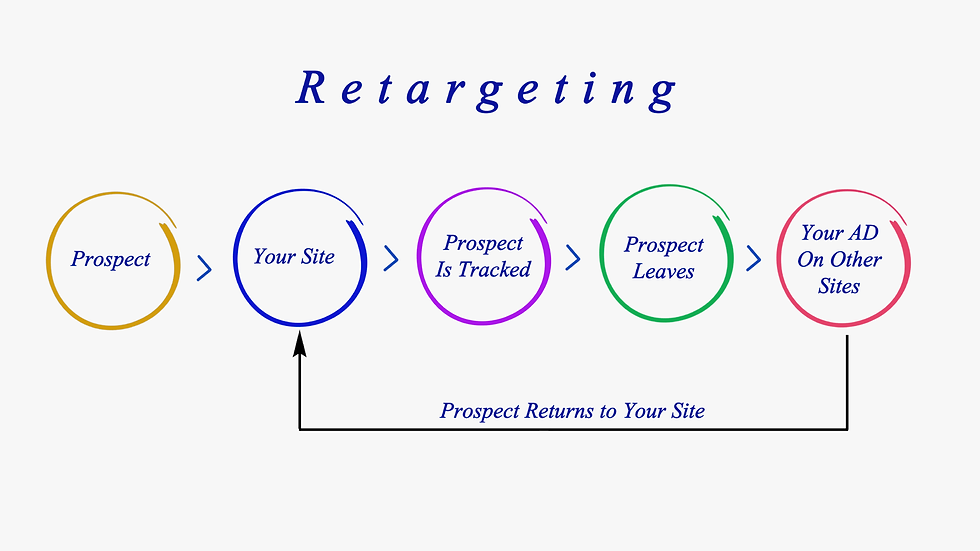
This is not sophisticated — it is just systematic. Most B2B brands have the technology to run this loop and never set it up.
Content → Attention → Engagement → Retargeting → Lead. Every step in this chain matters. Most brands only show up at the first one.
How to Build a Content Engine (Not Just a Calendar)
A content engine is a repeatable system that produces, distributes, and optimises content in a way that compounds over time. Here is how to build one:
Step 1: Define ICP + Core Problems
Before a single word is written, you need absolute clarity on who you are writing for and what they are struggling with. No ICP definition means no targeting, which means wasted content. According to CMI, B2B companies with a documented content strategy are 414% more likely to report success. Strategy starts with audience clarity.
Step 2: Build Content Themes
Not a list of random topics — a structured set of themes that map directly to your ICP's pain points and buying triggers. Each theme should be something your ideal client is actively thinking about, and your content on that theme should consistently position your brand as the most credible voice in the space.
Step 3: Map Distribution Channels
For every piece of content, define where it goes before you create it. Which channels? In what sequence? Who is responsible for each? This is what transforms a content calendar into a content engine B2B brands can actually rely on.
Step 4: Repurpose Aggressively
A long-form blog post should generate at minimum: three to four LinkedIn posts, one email, one short-form video script, and one paid ad creative. Research from Demand Metric shows content marketing costs 62% less than traditional marketing, whilst generating three times as many leads — but only if you maximise the reach of every asset you create.
Step 5: Track What Actually Matters
Leads, pipeline influenced, and conversion rate — not impressions and likes. The Pipeline360 2025 report confirms that high-performing teams prioritise revenue as their primary KPI, with 50% using revenue generated as their lead metric. That discipline is what separates content programmes that are tolerated from those that are trusted.
The Cost of Getting This Wrong
The cost of a broken B2B content distribution strategy is not just a disappointing analytics report. It is a wasted budget on content that nobody sees. It is burnt-out marketing teams producing work that gets no traction and no recognition. It is leadership losing faith in marketing entirely — and making the next budget cycle even harder to win.
It is also an opportunity cost. Every month spent publishing without a distribution system is a month your competitors — who do have a system — are compounding their advantage.
Most brands don't fail because they lack content. They fail because nobody sees it — and nobody buys from it.
The Brands Winning in 2026 Are Not Creating More — They Are Distributing Better
Content is not dead. It never was. What is dead — or should be — is the idea that publishing something is the same as distributing it.
The brands generating a consistent B2B content marketing pipeline in 2026 share one characteristic: they treat content as an asset, distribution as an engine, and conversion as an outcome. They are not asking, "How do we create more?" They are asking, "How do we make what we create impossible to ignore?"
That question requires a B2B content distribution strategy, not a better content brief.
The brands winning in 2026 aren't creating more content. They're building systems that make their content impossible to ignore.
If your content is not driving the pipeline, the content is probably fine. The system is the problem. That is exactly what we fix.


Comments